~ written by Ashley, Addy’s mom
“The morning of May 10 started like any other—until it wasn’t.
When I went to pick Addy up from her crib, she immediately began to cry, and it wasn’t her normal cry. I held her and tried to comfort her, but the crying continued. Looking back, it was that distinct “meningitis cry,” though at the time, that never even crossed my mind.
I tried to feed her, but she wasn’t able to keep anything down. When I touched her forehead, she felt warm—her temperature was 102°F. I called her doctor right away to explain what was happening. Because this was during COVID, sick children had to be seen in a separate office, and there were no appointments available. We decided to take her to urgent care–they told me to ‘keep doing what I was doing,’ and that it would likely pass.
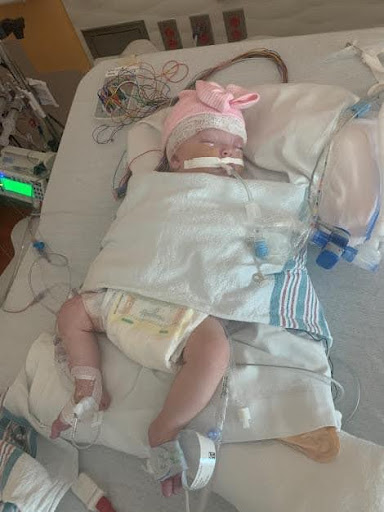
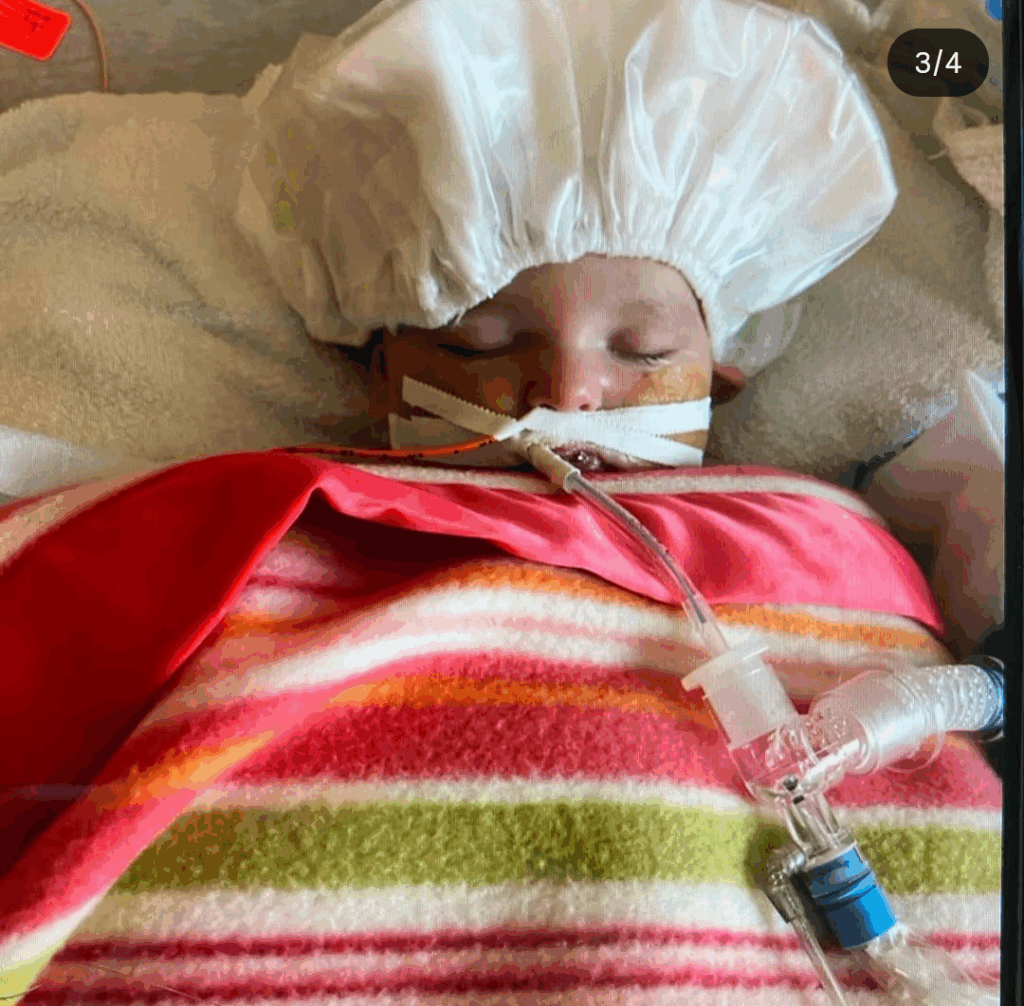
By the end of the day, Addy was barely awake and refused to eat. My husband and I decided to take her to our local hospital, and she was quickly transferred to Helen DeVos Children’s Hospital in Grand Rapids. They wheeled Addy in on the stretcher, and right behind her came the ventilator. I remember asking if it was for her room, and when they said yes, my heart sank. When my husband arrived, I had to tell him that our little girl was being intubated. I had previously worked in the ICU as a tech, but nothing prepares you for seeing your own child hooked up to so many tubes and wires.
That night, the PICU doctor came in and told us that Addy was extremely sick and that we should prepare ourselves for the possibility of not bringing her home. I can still feel the weight of those words.
Our nurse that first night was an angel. We had been awake for more than 36 hours at that point — running on adrenaline, fear, and sheer love — and she could see it written all over us. She gently encouraged us to go rest and sent us up to the 11th floor, where they had turned the space into special parent rooms for families with critically ill children in the PICU, so they could stay close. She promised she would take care of our girl.
The next morning, we came down to find that Addy’s isolation precautions had been lifted. That’s when they told us the diagnosis: Late-Onset Group B Strep, which had led to bacterial meningitis and sepsis. Her body was in total organ failure.
Most people only hear about Group B Strep during pregnancy, when your obstetrician tests you around your 36th week. If you test positive, you get antibiotics during labor. If you test negative, that’s usually the end of the conversation. No one tells you what can happen if your baby arrives too quickly for those meds, or that late-onset Group B Strep—even though rare—can be devastating.
Now that doctors knew what they were dealing with, Addy was started on the right antibiotics. We then had to cross another hurdle when she began having seizures—multiple ones. At one point, she was on four different seizure medications at once.
An MRI revealed brain swelling, multiple strokes, and several brain bleeds. During rounds, one neurologist told us he thought we should stop care. As my husband nearly passed out, another neurologist looked right at me and shook her head no. She came into our room later and said, “We’re not stopping care. Addy is fighting. She’s awake, moving, and trying to breathe over the vent—which she shouldn’t even be able to do.”
We were told that if she did survive, she might never breathe, walk, eat, or do anything independently again.
During her stay, Addy also developed a blood clot in her leg from a central line, which meant she had to be on Lovenox injections. One of the biggest and hardest challenges early on was giving our baby shots—twice a day—for three months for her blood clot. It’s something no parent should ever have to do.
We had two incredible residents who followed Addy’s entire 18-day hospital stay. One of them, Dr. Kevin, once ran up to us in the cafeteria with a big smile—he had taken a photo of Addy during her bath because ‘she looked so cute,’ and he wanted us to see. Little moments of kindness helped us keep going.
Addy’s main nurse, Toni, became part of our family. She always seemed to know what I was thinking and would even speak up for me during rounds—’Mom wants to know…’ she’d say with a smile. Her care and compassion gave us strength when we had none left.
After 12 days, Addy came off the ventilator—breathing on her own. It was bittersweet leaving the PICU, but it meant she was healing. The next six days were focused on building her strength and managing her feeding tube. After 18 long days, we finally got to take her home—on just one seizure medication and her blood thinner injections.
Feeding was another huge hurdle. Addy first had an NG tube, and if pulling them out were an Olympic sport, she would have taken gold. Eventually, she needed a G-tube, which came with its own struggles—pain, granulation tissue, and constant care. Thankfully, after a few months, she was able to eat by mouth again.
To help Addy learn to thrive in this new normal, therapy became essential for her success. Her milestones came later than most, but she reached them all! She sat up on her own at nine months, walked with a walker for months, and—after two years of physical therapy—walked completely on her own at 2½ years old.
Today, at age 4, Addy is still nonverbal, but she now has an AAC device that we hope will help her learn to communicate in new ways.
Therapy has brought us so many victories—some small, some huge, all worth celebrating. Each therapist has played a key role in helping Addy find her strength and independence. From sitting up for the first time, to taking her first independent steps, to learning how to use her communication device—every milestone has been a win.
Therapy has given Addy confidence, strength, and new ways to interact with the world around her. It’s also helped our family learn how to support her needs, celebrate her progress, and find hope even on the hardest days. These therapies have not only changed her life, but ours as a family.
Therapy is essential, but it’s also financially draining. The cost adds up quickly—especially when your child needs multiple therapies at once. These therapies are not optional; they’re the reason children like Addy get to live, grow, and thrive. Families shouldn’t have to sacrifice and choose between financial stability or their child’s progress, but so many do.
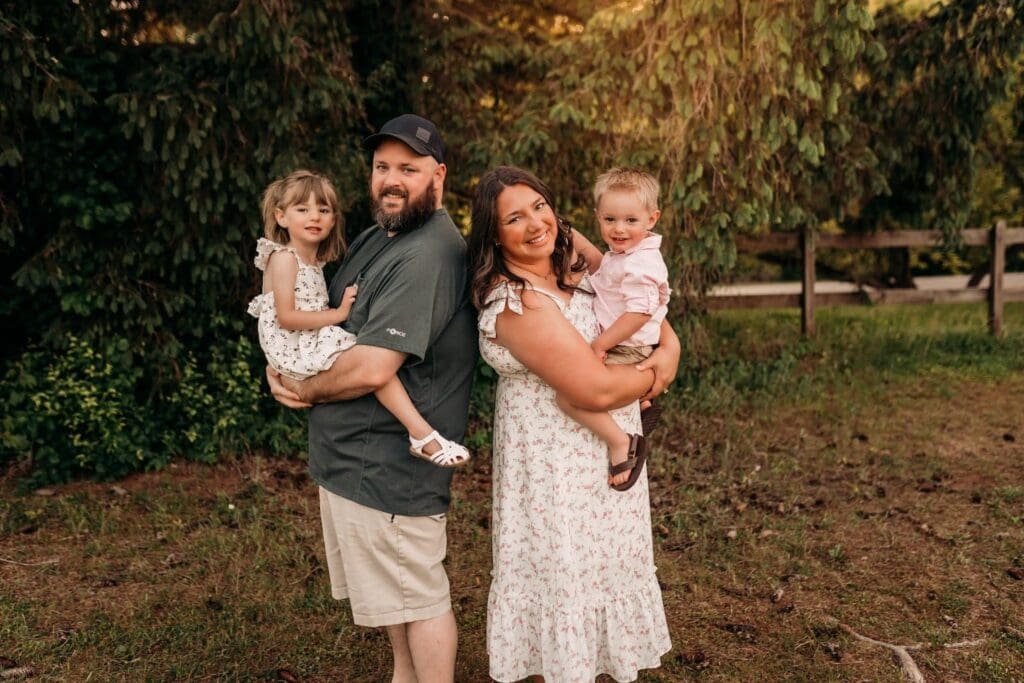
For us, hope means never giving up, even when the odds seem impossible. It means believing in miracles, trusting in medicine, having access to essential therapies, and holding on to faith that tomorrow will be better than today.We dream of a future where Addy continues to defy every expectation—where she finds her voice, her independence, and her happiness. Our hope is that Addy will always know how strong and loved she is, and that her story will inspire others to never lose faith in the power of resilience.”